 Health28 May 2026
How to Recognize AI Slop in Online Dietary Advice
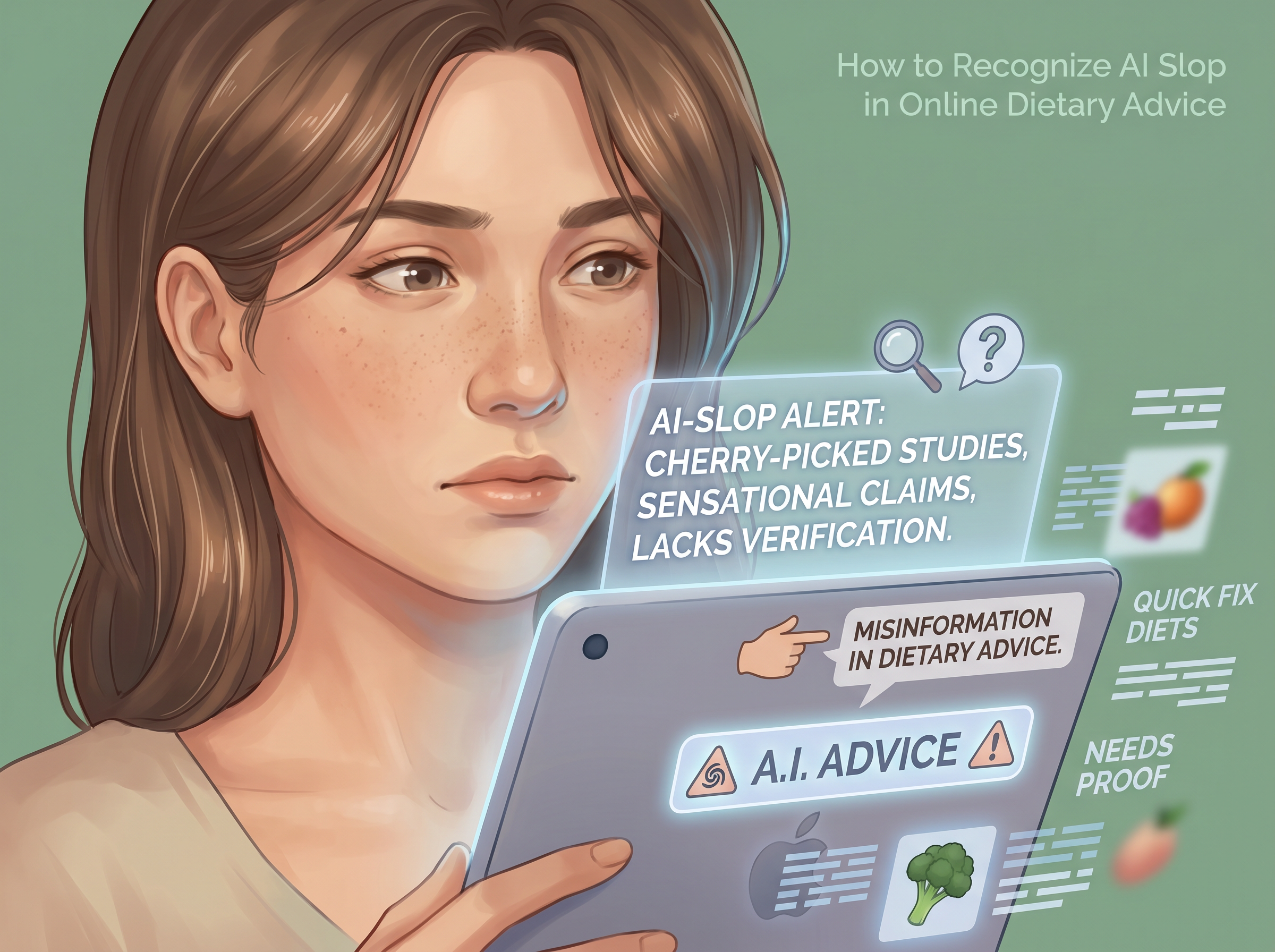
Be cautious of AI-generated dietary advice that may mislead you with misinformation.
Understanding AI Slop in Dietary Advice
In the age of technology, consumers are increasingly turning to online sources for dietary advice. However, much of this guidance is generated by artificial intelligence, leading to a phenomenon referred to as "AI slop." This term describes misleading nutritional information that lacks rigorous verification, often promoting sensational claims or cherry-picked research. As consumers navigate these digital landscapes, it is crucial to recognize how to distinguish valuable information from dubious advice.
The Rise of AI-Generated Content
AI-generated content has proliferated in various fields, including nutrition. While these systems can analyze vast amounts of data, they often lack the nuanced understanding that human experts bring to dietary recommendations. Consequently, the outcome can be misleading, especially if the algorithms prioritize engagement over accuracy. Users may be drawn to sensational headlines or promises of rapid results, but such claims are not always backed by science.
Identifying Misinformation
To safeguard against misinformation, consumers should be vigilant about several key indicators of AI slop:
- Sensational Claims: Be cautious of advice that promises extreme or quick results, such as losing a significant amount of weight in just a few days.
- Unverified Sources: Check the credibility of the sources cited in the articles. Reliable dietary advice should reference peer-reviewed studies or qualified professionals.
- Cherry-Picked Research: Analyze whether the presented information comprehensively covers the topic. AI-generated content may selectively highlight studies that support a particular viewpoint while ignoring contradictory evidence.
Evaluating Online Nutritional Information
Critical evaluation is essential when interpreting online dietary guidance. Here are steps to ascertain the quality of nutritional advice:
- Cross-Reference Information: Look for consistency across multiple reputable sources before acting on dietary advice.
- Consult Experts: Whenever possible, seek the counsel of registered dietitians or nutritionists who can provide personalized, evidence-backed insights.
- Be Skeptical: If the information seems too good to be true, it likely is. Maintain a healthy skepticism towards extraordinary claims, especially those made by unverified online entities.
The Importance of Critical Thinking
As AI continues to evolve, the potential for high-quality nutritional advice may increase. However, consumers must engage in critical thinking when processing information. By doing so, they can mitigate the risks associated with AI slop and make informed dietary choices that are grounded in reality rather than sensationalism. In conclusion, the continued vigilance against misinformation in dietary advice is essential for maintaining a healthy lifestyle and making wise nutritional decisions.
Popular news
The EU has sanctioned extremist Israeli settlers for serious human rights abuses against Palestinians in the West Bank, targeting settlement groups.





Subscribe to
our news
Get the most important updates and top stories in your inbox.