



 Health08 May 2026
Fabricated References: A New Threat to Editorial Integrity
A study reveals that fabricated references pose significant threats to academic integrity, calling for improved verification systems.
Growing Concerns Over Reference Authenticity
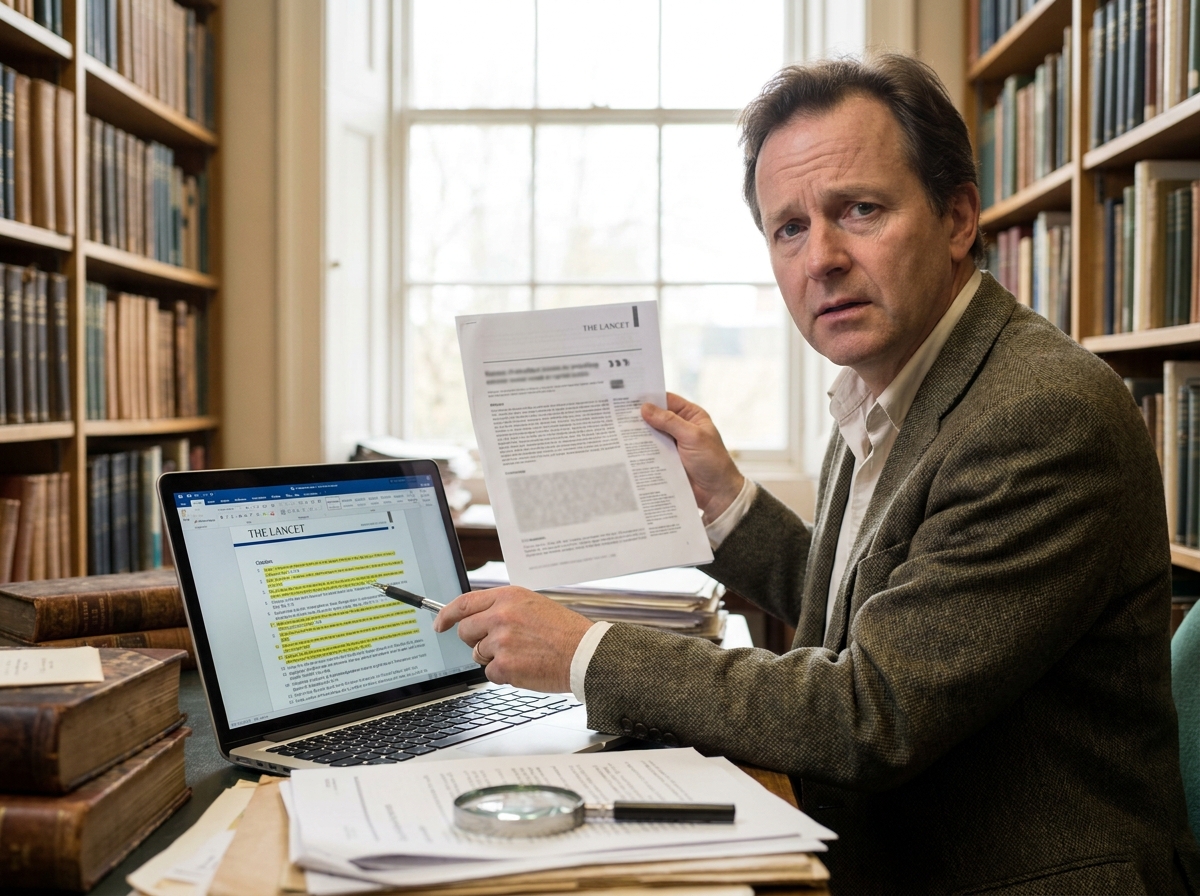
Recent research published in The Lancet brings to light a pressing issue within academic publications: the integrity of references. As the volume of academic literature continues to soar, so too does the challenge of ensuring that all cited references are authentic. This study, conducted by Topaz and colleagues, stands as the first systematic evaluation of reference authenticity across a significant dataset.
Analyzing the Data
The researchers meticulously examined 125,615,773 references taken from 2,471,758 papers available on the PubMed Central Open Access platform, covering publications from January 1, 2023, to February 18, 2026. Their findings revealed that only 77% (or 97.1 million) of the references included valid PubMed IDs, which facilitated a more in-depth analysis.
Methodological Approach
To filter out inaccuracies, the authors employed rigorous checks against multiple databases, including PubMed, Crossref, OpenAlex, and Google Scholar. The references underwent a series of filters designed to correct for common errors such as misspellings in names or incorrect titles. This detailed vetting process is critical in combating the rising tide of misinformation within scientific literature.
Implications for Academic Integrity
The implications of these findings beckon a reevaluation of how references are verified in academic publications. As accuracy in citations is paramount to the credibility of scientific work, the study emphasizes the necessity for enhanced verification systems to safeguard editorial integrity. With fabricated references threatening the foundation of academic trust, the focus must shift towards fostering a culture of accountability in scholarly communication.
In conclusion, the significant findings of this systematic evaluation underscore the urgent need for reforms in how references are managed and verified within academic contexts. The call to action is clear: the academic community must work collectively to protect the integrity of scholarly work from the perils of misinformation and ensure adherence to the highest standards of academic rigor.
Popular news
Trump declares a three-day ceasefire in the Russia-Ukraine war, with both sides agreeing. A prisoner exchange is also set in motion.



Subscribe to
our news
Get the most important updates and top stories in your inbox.