 Technology29 May 2026
Astronomers Discover Red Dwarf Stars Devouring Young Rocky Planets
New research suggests red dwarf stars are consuming rocky planets, raising questions about the survival of Earth-like worlds.
Astronomers Uncover Unprecedented Clue to Stellar Behavior
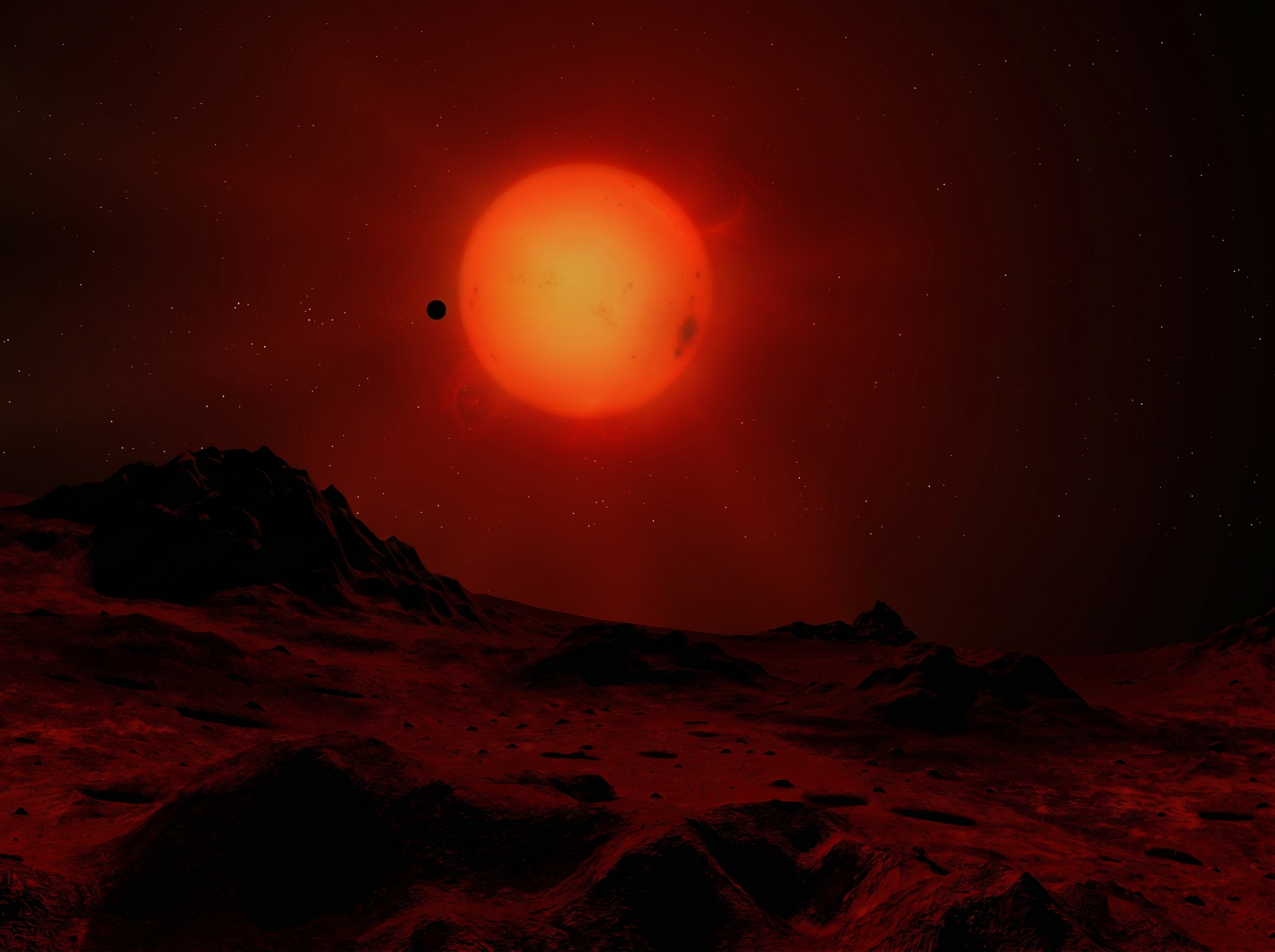
A recent study has unveiled a startling phenomenon among young red dwarf stars, suggesting these stars may be consuming their own rocky planets. Researchers from Keele University have found that certain red dwarfs exhibit unusually high levels of lithium, an element expected to be almost depleted in these stars by the time they reach adolescence. This discovery, published in Monthly Notices of the Royal Astronomical Society, indicates a chaotic and tumultuous environment in early planetary systems surrounding red dwarf stars.
The Key Discovery
The team surveyed thousands of stars and identified six red dwarfs that deviated significantly from their peers. Robin Jeffries, the lead author of the study, notes, "Even a small amount of lithium stands out clearly in these stars—a bit like throwing paint onto a blank canvas." Within this rare group, which constitutes only about 2 to 3 percent of stars of similar age, the excess lithium levels hint that these stars may have feasted on rocky planets, possibly equivalent to three to ten Earths' worth of material.
Implications for Planetary Systems
The presence of this extra lithium suggests profound implications for the formation and evolution of planetary systems around red dwarfs. Traditionally, astronomers believed that large-scale collisions and disruptions would be rare. However, the findings indicate that early rocky worlds might frequently collide or be pulled into their stars, ultimately preventing the development of life on potentially habitable exoplanets.
Researchers postulate that while young planetary systems may initially form in a structured manner, gravitational interactions could wreak havoc, causing planets to be flung inward to be consumed by their star. This chaotic behavior raises concerns about the viability of Earth-like worlds in the habitable zones of red dwarfs, which are the most common type of star in the Milky Way.
The Mechanics Behind Lithium Levels
The study also explores why some red dwarf stars retain their lithium so uniquely. Expected to be destroyed during the stellar lifecycle, lithium can occasionally be preserved in the star’s outer layers through unique events, such as swallowing rocky planets. Jeffries and his team explored various hypotheses, including magnetic activity and the prolonged consumption of materials from birth disks, but found them insufficient to explain the observed lithium levels.
With statistical modeling and computer simulations supporting their findings, the researchers concluded that the ingestion of rocky planets is likely the primary explanation for the high lithium readings in these stars. This phenomenon underscores the unpredictability of planetary systems dominated by red dwarf stars.
As astronomers continue to refine their understanding of red dwarfs and their environments, this research paves the way for deeper comprehension of planetary formation and the potential for life beyond Earth.
Conclusion
The alarming behavior of red dwarf stars, as they potentially consume their rocky planets, presents a fascinating yet concerning chapter in the study of astronomy. With vast numbers of Earth-sized planets orbiting these stars, understanding their chaotic youth may shed light on the fragile conditions necessary for life to emerge elsewhere in the universe.
Popular news
The EU has sanctioned extremist Israeli settlers for serious human rights abuses against Palestinians in the West Bank, targeting settlement groups.





Subscribe to
our news
Get the most important updates and top stories in your inbox.