




 World20 Jun 2026
Germany's School System: A Battleground for Educational Equality
Germany's school system illustrates stark inequalities, with innovative efforts at Kettelerschule in Bonn highlighting the urgent need for educational refo
Educational Inequality in Germany
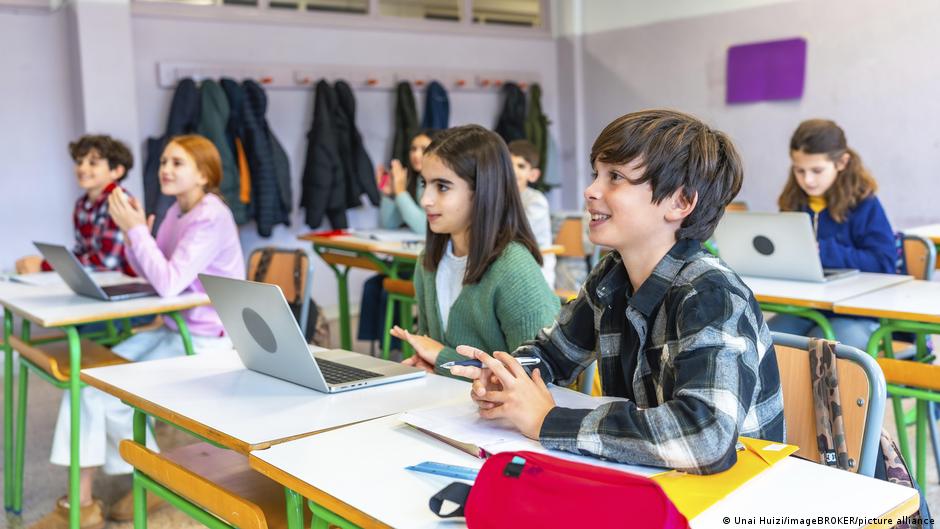
Inequality in the German education system is evident from an early age, as children's academic paths are often shaped before they even start kindergarten. A recent national report on education highlights the significant impact of social background on students' educational success. The Kettelerschule in Bonn serves as a notable example, showcasing how innovative teaching methods can elevate educational outcomes in a challenging environment.
A Transformative Approach at Kettelerschule
Situated in a less affluent area, Kettelerschule serves around 250 students, primarily from immigrant families who may not speak German at home. Despite these challenges, the school has managed to achieve impressive results, with the percentage of students moving to university tracks after elementary school rising from a mere 0.5% to 30% over two decades. This transformation can largely be attributed to the visionary leadership of principal Christiane Lang-Winter, who has been instrumental in reshaping the school’s approach to education.
Lang-Winter joined Kettelerschule as a young teacher in 2004 and quickly recognized the need for change. "It became clear to me that either I would leave or the school would have to change," she expressed. Under her direction, Kettelerschule adopted a collaborative teaching style, termed "learning families," which allows mixed-age groups to learn together, fostering a supportive educational environment.
Emphasizing Language and Early Support
A targeted focus on language acquisition has been central to Kettelerschule’s strategy. According to Lang-Winter, "We need high-quality language support for all children... If I don't have language, I can't be educated." The school collaborates with local daycares, ensuring that preschoolers receive exposure to the school environment early on. This proactive approach aims to build a foundation for learning before formal education begins.
The Broader Context of Educational Disparity
Despite Kettelerschule’s successes, the national education report reveals alarming statistics regarding educational inequality across Germany. For instance, teenagers from socially disadvantaged families are five times more likely to lag in reading proficiency compared to their more privileged peers. Just 8% of students leave secondary school without a diploma, a troubling indicator of systemic failures within the educational framework.
In response to these issues, German Education Minister Karin Prien has urged that reforms are necessary to address the widening educational gap that begins at birth and continues to grow. She has pledged to propose legislation aimed at implementing nationwide educational standards before the parliamentary summer recess.
Calls for Targeted Reforms
Organizations like the BSK federal student conference emphasize the urgent need for reforms that ensure educational opportunities do not depend on socio-economic status or geography. Isabelle Seltenreich, the organization’s press coordinator, advocates for targeted support in disadvantaged neighborhoods, better staffing, resources, and smaller class sizes to cater to diverse learning needs. "No student should fall through the cracks in the system," Seltenreich insists.
Critique of the Current System
Silke Müller, a seasoned educator, criticizes Germany’s education system in her 2026 book, Schule Gegen Kinder (School Against Children). She argues that the current framework is flawed, focusing more on whom students encounter rather than providing equal opportunities. Müller envisions a system focused on skill development rather than rigid grading structures.
While many educators and policymakers acknowledge the critical state of educational inequality, discussions often spiral into peripheral topics like smartphone bans rather than addressing foundational issues. Bob Blume, a former teacher and influencer, noted that the real questions about effective student education have been overshadowed by superficial debates.
As calls for reform intensify, the need for a substantial dialogue about education, its challenges, and the solutions continues to grow, signaling a crucial area for development in Germany's future.
Ultimately, the situation at Kettelerschule in Bonn illustrates both the potential for impactful change within the educational landscape and the overarching challenges that remain. The commitment to foster equitability in education is essential for a more just society.
Popular news
The US triumphed over Australia 2-0 in the World Cup, showcasing their strength as hosts and confirming their knockout stage spot.




Subscribe to
our news
Get the most important updates and top stories in your inbox.