




 Technology24 May 2026
Amazon's Bee Wearable: A Promising Yet Intrusive AI Assistant
Amazon's Bee wearable raises privacy concerns despite its useful AI features for meetings and organization.
A Closer Look at Amazon's Bee Wearable
I recently had the opportunity to try out Amazon's Bee, a new AI-enabled wrist gadget designed to function as a personal assistant. The device, acquired by Amazon last year, boasts features aimed at transforming everyday conversations into organized notes, making it particularly appealing for those who struggle with memory or organization in their daily lives.
How Bee Works
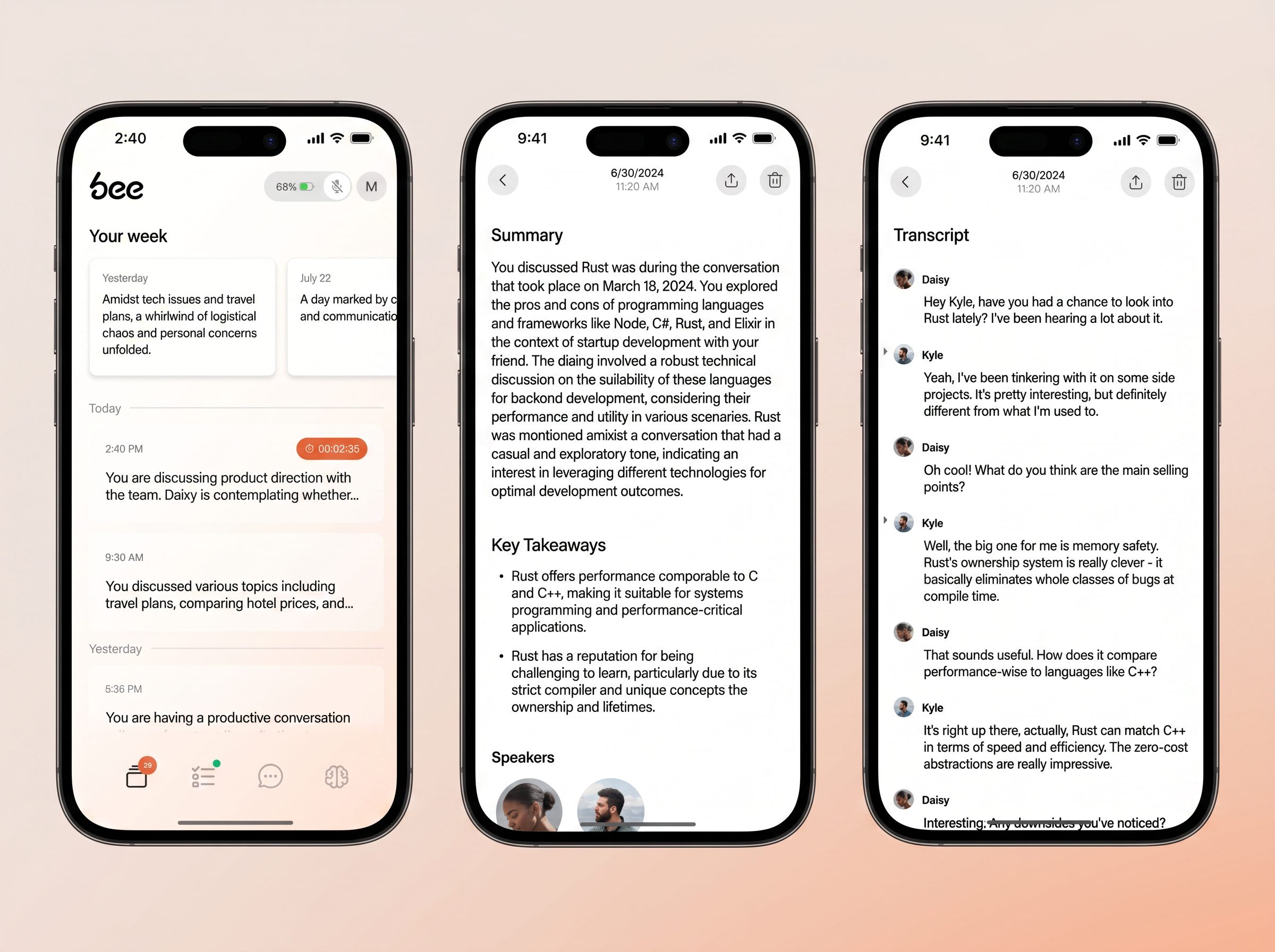
The setup process for Bee is fairly straightforward. Users need to power up the device, wear it, sync it with the Bee mobile app, and enter some basic personal information. Once activated, the Bee™ wearable uses a built-in recorder that can be toggled on and off with a button press. A flashing green light indicates when the device is recording conversations. After recording, the mobile app generates a readable summary and full transcript of the conversation, providing users with an easy method to revisit discussions at any time.
Potential Benefits for Professionals
For professionals constantly juggling meetings, Bee can serve as a digital assistant, helping to keep all discussions organized and easily accessible. During a business-related phone call, I activated Bee after receiving consent to record our meeting. The app delivered a tidy summary, breaking down our conversation segments for easy future reference. However, this capability isn't unique to Bee, as similar services are provided by other transcription tools like Otter and Granola.
The device's ability to summarize meetings could serve well to anyone who manages numerous appointments throughout the day, allowing users to quickly review what was discussed without needing to replay entire conversations.
Concerns Over Privacy
While Bee presents enticing features for professional use, I must admit that the notion of having a recording device strapped to my wrist at all times feels invasive, particularly for a privacy enthusiast like myself. In a world where digital surveillance is pervasive, the idea of continuously being recorded is unsettling. Additionally, Bee’s marketing leans toward personal use, which creates discomfort for those who value their privacy.
Data Collection and Security Risks
To function effectively, Bee requires extensive mobile permissions, such as access to your location, photos, phone contacts, and calendar. It even allows health data sharing, which raises additional concerns regarding users' data privacy. All of this information is processed and stored in the cloud, bringing about significant risks related to cybersecurity. Although Bee claims to utilize encryption and undergo security audits, the history of data breaches in significant tech companies like Amazon does cause apprehension.
Mixed Results with Transcription Accuracy
In my experience with Bee, the device demonstrated moderate success in summarizing conversations but struggled with transcription accuracy. I often had to manually input the names of different speakers, as the device could not always identify them correctly. Occasional omissions in the transcriptions left gaps in the conversation records that required follow-up questioning to clarify.
Conclusion: A Tool with Potential Yet Intrusive Design
In summary, Amazon's Bee wearable shows promise as a valuable organizational tool for professionals, but its invasive nature raises legitimate concerns for personal users. As digital privacy continues to be a pressing issue, it’s critical for potential users to weigh the benefits of efficient note-taking against the implications of constant monitoring in their personal lives.
Popular news
Rising tensions in the Strait of Hormuz as U.S. claims 100 vessels redirected by blockade against Iran’s new territorial claims.




Subscribe to
our news
Get the most important updates and top stories in your inbox.